

Living Things Change Over Time (Adaptation) + Earth’s Climate
Stage 3
Science Excursion


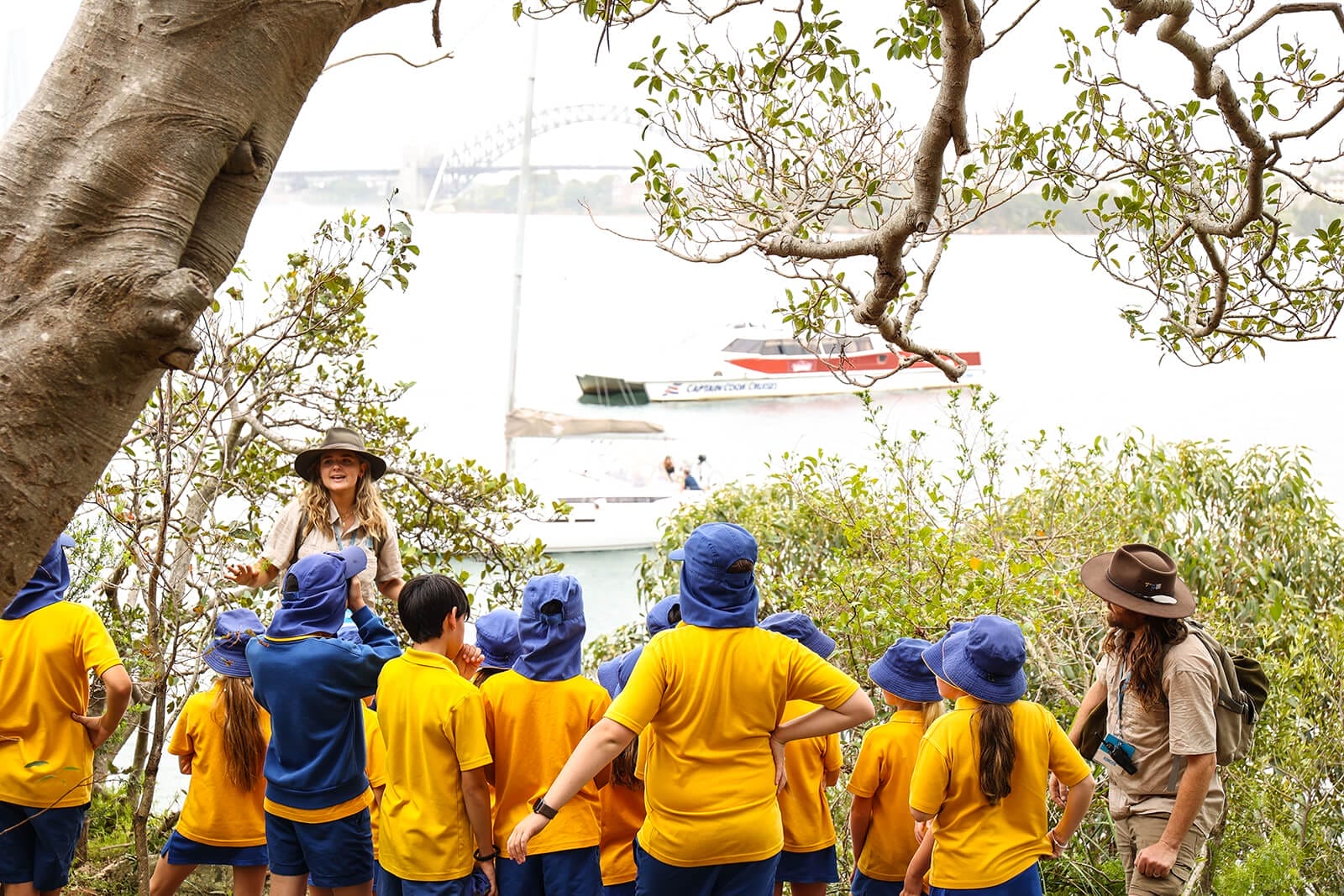
This Stage 3 outdoor excursion explores adaptations and Earth’s climate in a beach or park setting!
Students begin with a wildlife introduction featuring ever-changing taxidermy animals, from possums to native birds, discovering how their features help them survive and how climate shapes their habitats.
Depending on your location, students then enjoy hand-reel fishing, building sand habitats for turtles, or bug catching in the bush to see how ecosystems respond to change.
A fun, hands-on day connecting living things, environments and climate science.
10am- 2pm (4 hour)
Arrival at 10:00am
Our Rangers will be waiting right at the bus bay to greet you, usually with too much enthusiasm for this early in the morning!
10:00am – 10:25am
Arrival, morning tea, and toilet break.
10:25am – 10:55am
Time for the Ranger Jamie Animal Show! Students get up close to our wild collection of taxidermies, anything from cute possums to giant crocs. The line-up changes daily… because we like to keep things interesting.
After the show, students are split into groups of approximately. 35, each with their own Ranger. Activities run on rotation, so groups may complete experiences at different times.
10:55am – 11:30am
Activity Rotation 1
11:30am – 12:00pm
Activity Rotation 2
12:00pm – 12:30pm
Lunch and toilet break, a well-earned pit stop for hungry explorers (and teachers!).
12:30pm – 1:10pm
Activity Rotation 3
1:10pm – 1:50pm
Activity Rotation 4
1:50pm
Wrap-up a final toilet stop.
2:00pm
Departure time… and we’ll sadly say goodbye (until your next Ranger Jamie adventure!).
Please note: Times may vary slightly on the day. This schedule is a guide only.
Activities will vary based on the location and the natural features available. These may include:
- Hand reel fishing;
- Dip-net fishing;
- Crab Catching;
- Beach Habitat Building;
- Bug Catching + Camouflage;
- Web of Life Workshop;
- Waterworks;
- Water pH/ Dissolvability Challenge.
ST3-SCI-01 uses evidence to explain how scientific knowledge can be used to develop sustainable practices;
ST3-PQU-01 poses questions to identify variables and conducts fair tests to gather data;
ST3-DAT-01 interprets data to support explanations and arguments;
ST3-DDT-01 uses design processes to create, evaluate and modify designed solutions ST3-DDT-02 creates, evaluates and modifies algorithms to code or control digital devices and systems;
ST3-CWT-01 creates written texts to communicate understanding of scientific and technological concepts and processes.
Living things may change over millions of years, in response to their environments
- Observe behavioural and structural adaptations of plants and animals, and suggest how these may help them survive in their environments;
- Examine and explain how the characteristics of flowers, fruit and seeds are adaptations for reproduction in plants;
- Interpret a food web that describes the flow of matter and energy between plants and animals in an ecosystem;
- Identify and describe how the loss or introduction of plants or animals affects an Australian ecosystem;
- Examine evidence that environments have changed over time and continue to change;
- Describe how Aboriginal and/or Torres Strait Islander Peoples’ sustainable practices continue to protect the environment.
A fixed amount of usable matter makes up all the material on Earth
- Explain how recyclable, reusable, renewable, biodegradable and compostable materials enhance sustainability;
- Recognise that in a fair test, an independent variable is changed, a dependent variable is measured, and controlled variables remain the same;
- Pose questions to determine whether substances dissolve in water by identifying variables and conducting and evaluating fair tests;
- Investigate ways to collect and process waste to reduce pollution or increase the sustainable use of materials;
- Create and communicate a plan to implement a sustainable practice in a community that addresses an identified environmental concern.
Earth’s climate is affected by natural and human activities
- Identify the technologies used to collect weather data and describe how they are used;
- Describe the differences between climate and weather;
- Research the effects of natural events on the atmosphere;
- Explain the effects of natural events and human activities on climate.
North Sydney
- Bobbin Head Ku-ring-gai National Park
- Clifton Gardens Chowder Bay Mosman
- Nielsen Park Vaucluse
- Berry Island Reserve
- Balmoral Beach, Mosman
- Clontarf Reserve, Manly
- Fagan Park
- Putney Park
- Wahroonga Park
Eastern Suburbs
- Cromwell Park South, Malabar
- Mutch Park, Pagewood
- Queens Park
- Robertson Park, Watsons Bay
- Yarra Bay Bicentennial Park, Botany
Inner West
- Ballast Point Park, Birchgrove
- Cabarita Park
- Elkington Park, Balmain
- Glebe Foreshore Parks
- Rodd Park
- Rozelle Parklands
- Sydney Park, Alexandria
South Sydney
- Audley to Bola Creek Rainforest Royal National Park
- Bonnie Vale Royal National Park
- Carss Park Bush Flat
- Garie Beach to Bola Creek Rainforest Royal National Park
- Gunnamatta Park Cronulla
- Wattamolla Royal National Park
- Bonna Point Reserve, Kurnell
- Garie Beach
- Bundeena
- Cooper St Park, Engadine
- Cook Reserve, Ruse
- Pine Park, Sans Souci
Western Sydney
- Auburn Botanic Gardens
- Mcarthur Park
- Lizard Log, Western Sydney Parklands
- Nurragingy Reserve, Doonside
- Plough and Harrow, Western Sydney Parklands
- The Dairy, Western Sydney Parklands
Illawarra
- Stanwell Park Beach Reserve
- Bald Hill to Stanwell Park Beach Reserve
- Blackbutt Reserve, Shellharbour
- Killalea State Park, Shellharbour
- Shellharbour South Beach
- Stuart Park, Wollongong
Newcastle, Central Coast & Hunter Valley
- Blakbutt Reserve, Kotara
- Brickworks Park
- Hunter Valley Gardens
- Foreshore Park
- Kincumba Mountain Reserve
- Norah Head Lighthouse
- Poppet Head Park
- Richley Reserve
- Swadling Reserve
- Lions Park, Woy Woy
- Speers Point Park
- Tanilba Bay
The cost of this exciting adventure is $24.00 + GST per student.
(Minimum charge x35)
This price includes:
- A fully guided full day with our enthusiastic and knowledgeable Rangers
(Think Steve Irwin meets the Ranger Jamie crew!); - A pre-completed Risk Assessment, making your planning a whole lot easier;
- Assistance sourcing bus quotes, so you’re not chasing bus companies all afternoon;
- All equipment and materials provided
- A syllabus-aligned program, thoughtfully designed to support real learning while keeping the day fun and engaging;
- Complimentary Coffee, Tea and Tim Tams (Exclusive to the teachers!).
Choose Your Date
Step 1 of 3
Please note: The Tramway Museum is available for excursions on Wednesdays only. This is a tentative booking. After your booking request is submitted, we will be in touch via email to confirm the requested date and arrange the final details for the booking.
All prices are +GST. As this program is an educational service, all GST charged can be reimbursed in its entirety by the Government.
FAQS
How many teachers/helpers do I need on my excursion?
The more grown-up sidekicks, the better! We recommend at least one teacher/parent helper per class. No extra cost for teachers or parent helpers on this program.
What equipment/ materials do we need to bring?
Students should bring morning tea, lunch, water bottles, and any required medication. We suggest sports uniform and comfortable shoes. We supply all the materials and equipment needed for your day.
What is the weather weather policy?
You can view our full policy here.
We’re flexible and happy to arrange an incursion alternative or, where needed, postpone your program.
How many groups will my students be in?
We usually plan for one Ranger per 35-40 students. On the day, your students will be split into groups of that size, with a Ranger assigned to each group to guide them as they rotate through the activities.