

Living Things Change Over Time (Adaptation) + Earth’s Climate – Harbour Cruise
Stage 3
Science Excursion


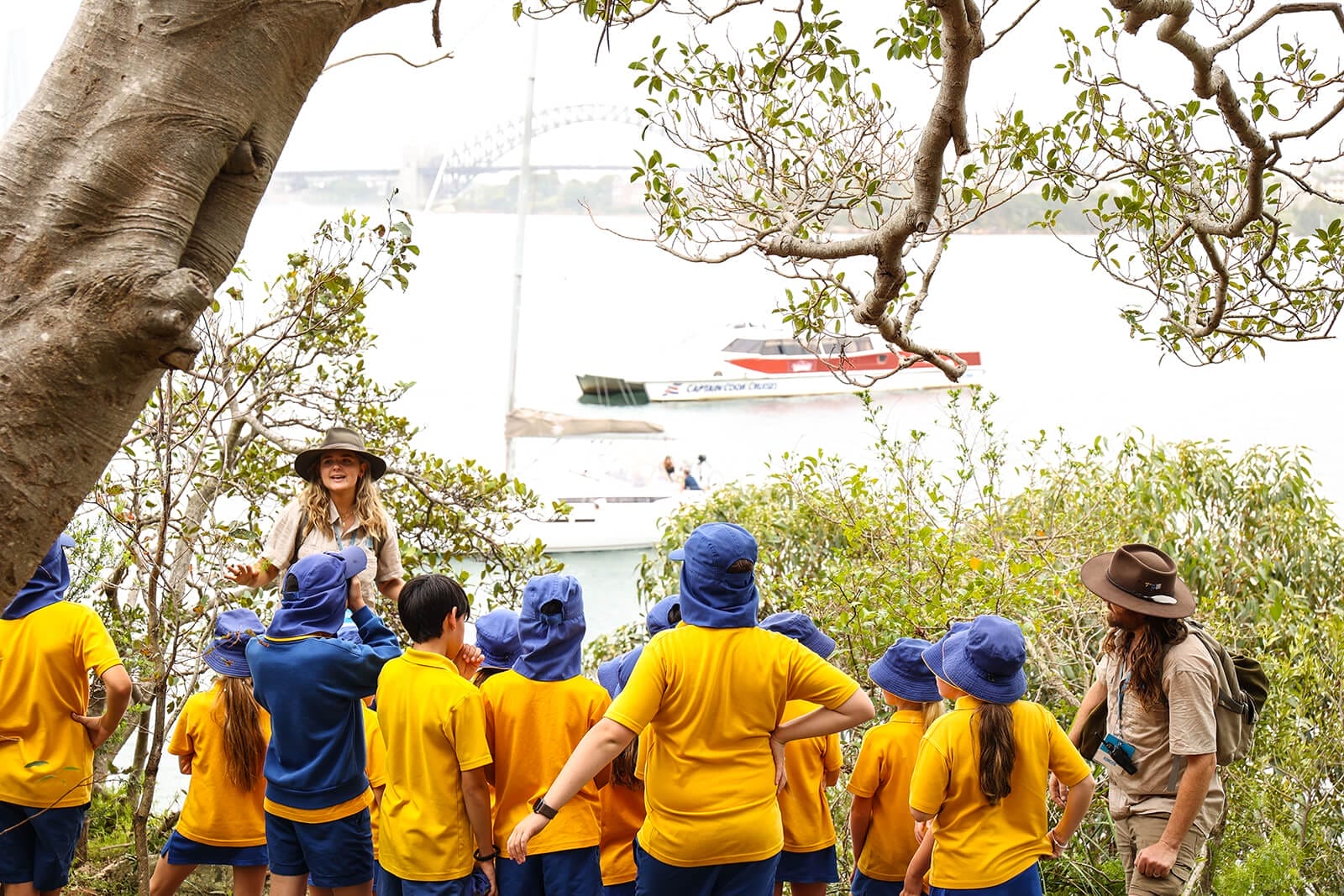
This Stage 3 outdoor excursion explores adaptations and Earth’s climate in a beach or park setting!
Students begin with a wildlife introduction featuring ever-changing taxidermy animals, from possums to native birds, discovering how their features help them survive and how climate shapes their habitats.
Depending on your location, students then enjoy hand-reel fishing, building sand habitats for turtles, or bug catching in the bush to see how ecosystems respond to change.
A fun, hands-on day connecting living things, environments and climate science.
10am- 2pm (4 hour)
10:00am – Arrival at Garrison Church
Meet your Rangers and get ready for a day of adventure!
10:00am – 10:30am – Walk to Circular Quay
A gentle stroll to the harbour, with morning tea and toilet breaks along the way.
10:30am – 10:55am – Exciting Introduction
A fun kickoff session before lining up to board your private harbour cruise.
10:55am – 11:30am – Harbour Cruise Adventure
Cruise through Sydney Harbour, spotting iconic landmarks like the Sydney Opera House and Harbour Bridge before arriving at your beach location.
11:30am – 12:15pm – Bug Catching with Camouflage Face Paint
Students get camouflaged and explore natural spaces to find bugs, mini-beasts and hidden critters.
12:15pm – 12:45pm – Beach Habitat Building
Students design and build beach habitats, creating mini homes for penguins and turtles.
12:45pm – 1:15pm – Cruise Back to Man O’ War Steps
Enjoy live trivia and fun commentary onboard as you sail back.
1:15pm – 1:45pm – Lunch at the Opera House Steps
1:45pm – 2:00pm – Wrap-Up & Departure
Say goodbye to your Rangers and hop back on the bus after a magical day by the sea.
Please note: Times may vary slightly on the day. This schedule is a guide only.
ST3-SCI-01 uses evidence to explain how scientific knowledge can be used to develop sustainable practices;
ST3-PQU-01 poses questions to identify variables and conducts fair tests to gather data;
ST3-DAT-01 interprets data to support explanations and arguments;
ST3-DDT-01 uses design processes to create, evaluate and modify designed solutions ST3-DDT-02 creates, evaluates and modifies algorithms to code or control digital devices and systems;
ST3-CWT-01 creates written texts to communicate understanding of scientific and technological concepts and processes.
Living things may change over millions of years, in response to their environments
- Observe behavioural and structural adaptations of plants and animals, and suggest how these may help them survive in their environments;
- Examine and explain how the characteristics of flowers, fruit and seeds are adaptations for reproduction in plants;
- Interpret a food web that describes the flow of matter and energy between plants and animals in an ecosystem;
- Identify and describe how the loss or introduction of plants or animals affects an Australian ecosystem;
- Examine evidence that environments have changed over time and continue to change;
- Describe how Aboriginal and/or Torres Strait Islander Peoples’ sustainable practices continue to protect the environment.
A fixed amount of usable matter makes up all the material on Earth
- Explain how recyclable, reusable, renewable, biodegradable and compostable materials enhance sustainability;
- Recognise that in a fair test, an independent variable is changed, a dependent variable is measured, and controlled variables remain the same;
- Pose questions to determine whether substances dissolve in water by identifying variables and conducting and evaluating fair tests;
- Investigate ways to collect and process waste to reduce pollution or increase the sustainable use of materials;
- Create and communicate a plan to implement a sustainable practice in a community that addresses an identified environmental concern.
Earth’s climate is affected by natural and human activities
- Identify the technologies used to collect weather data and describe how they are used;
- Describe the differences between climate and weather;
- Research the effects of natural events on the atmosphere;
- Explain the effects of natural events and human activities on climate.
- Watsons Bay – our default top pick!
- Clifton Gardens
- McKell Park
Your day will always finish back at Circular Quay.
Our pricing framework for Captain Cook Cruise programs is based on the total number of primary school students booked for the day.
Please note: 1 teacher is free for every 10 students.
Choose Your Date
Step 1 of 3
Please note: The Tramway Museum is available for excursions on Wednesdays only. This is a tentative booking. After your booking request is submitted, we will be in touch via email to confirm the requested date and arrange the final details for the booking.
All prices are +GST. As this program is an educational service, all GST charged can be reimbursed in its entirety by the Government.
FAQS
How many students can we bring along?
Here are our two vessel sizes:
- Up to 90 students
- Up to 180 students
What equipment/ materials do we need to bring?
What is your weather policy?
We cruise in the sheltered waters of Sydney Harbour, rain, shine, or under dramatic skies. Our boats offer comfortable indoor seating with large viewing windows, and if the weather turns, the program continues fully onboard.
If you need to change your scheduled date, please let us know at least 7 days in advance to avoid cancellation fees.