

People Care for Australia’s Water Environments
Stage 1
HSIE Excursion


The best place to learn about nature… is in nature!
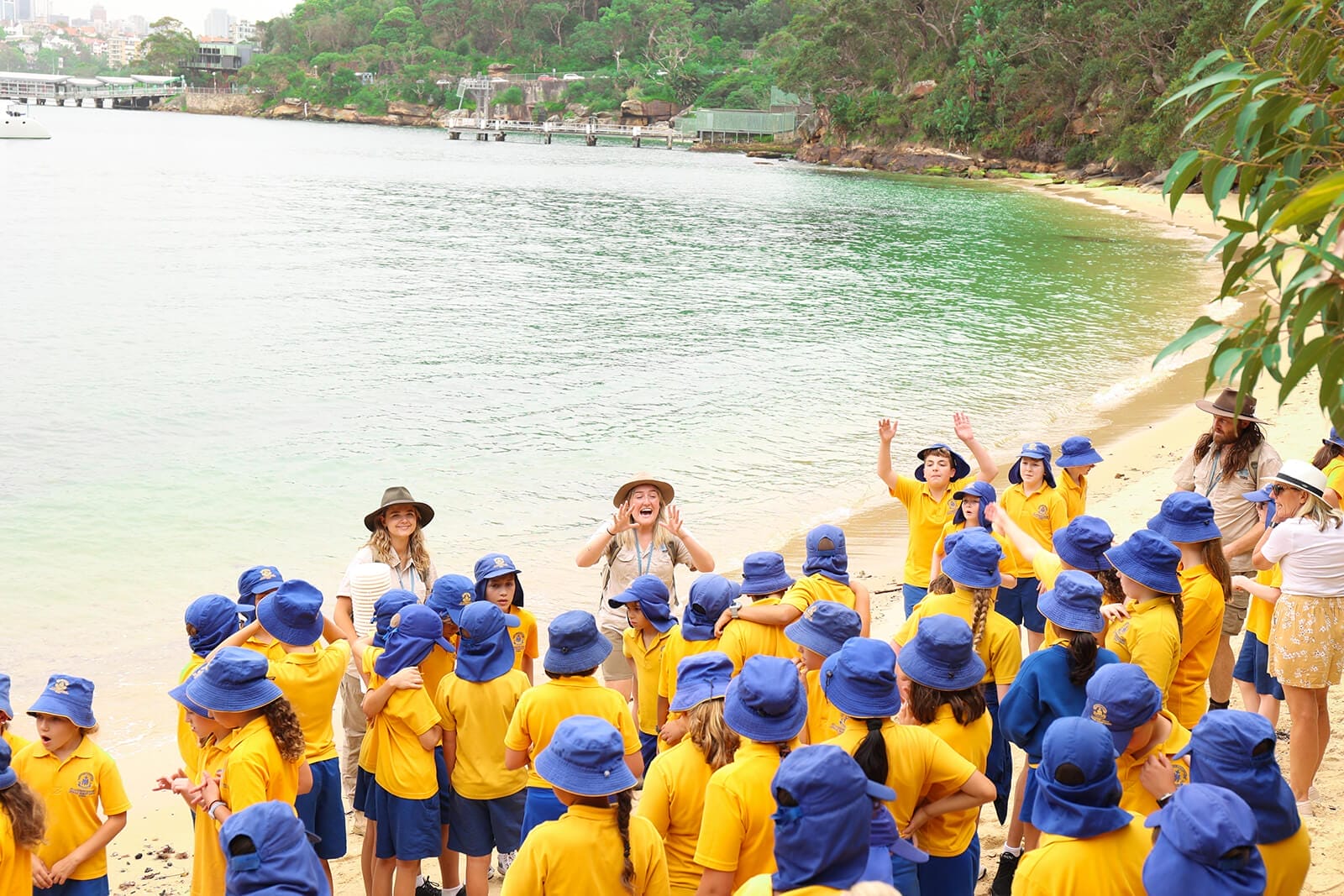
Join our Ranger Jamie crew outdoors to explore Australia’s rivers, lakes, beaches and oceans. Students learn the difference between freshwater and saltwater and what makes the Great Barrier Reef special.
They’ll meet our awesome taxidermy animals and take part in hands-on fun like fishing and habitat creation, discovering how we use and care for water responsibly.
A lively outdoor adventure all about Australia’s water places!
10am- 2pm (4 hour)
Arrival at 10:00am
Our Rangers will be waiting right at the bus bay to greet you, usually with too much enthusiasm for this early in the morning!
10:00am – 10:25am
Arrival, morning tea, and a toilet break.
10:25am – 10:55am
Time for the Ranger Jamie Animal Show! Students get up close to our wild collection of taxidermies, anything from cute possums to giant crocs. The line-up changes daily… because we like to keep things interesting.
After the show, students are split into groups of approximately. 35, each with their own Ranger. Activities run on rotation, so groups may complete experiences at different times.
10:55am – 11:30am
Activity Rotation 1
11:30am – 12:00pm
Activity Rotation 2
12:00pm – 12:30pm
Lunch and toilet break, a well-earned pit stop for hungry explorers (and teachers!).
12:30pm – 1:10pm
Activity Rotation 3
1:10pm – 1:50pm
Activity Rotation 4
1:50pm
Wrap-up and a final toilet stop.
2:00pm
Departure time… and we’ll sadly say goodbye (until your next Ranger Jamie adventure!).
Please note: Times may vary slightly on the day. This schedule is a guide only.
Activities will vary based on the location and the natural features available. These may include:
- Beach Habitat Building;
- Dip Net Fishing;
- Hand Reel Fishing;
- Bush/ Coastal Walk
- Waterworks;
- Crab catching.
HS1-ACH-01 describes interactions between Aboriginal Peoples and Country;
HS1-GEO-01 describes ways people connect to and care for places, water environments and each other, using geographical information;
HS1-ACH-01 describes interactions between Aboriginal Peoples and Country;
HS1-HIS-01 describes the ancient past and changes in communication over time, using stories, images, objects and sites as evidence.
People care for Australia’s water environments
- Observe and describe natural and human features of Australian rivers, lakes, beaches and oceans by collecting and representing data;
- Locate and describe freshwater and saltwater bodies in Australia;
- Describe the unique features of the Great Barrier Reef using Tier 2 and Tier 3 vocabulary;
- Compare the ways people use water environments in Australia by posing questions to collect data;
- Explain how people can use and care for water responsibly;
- Identify ways that Aboriginal and Torres Strait Islander Peoples value water Country and Place.
North Sydney
- Bobbin Head Ku-ring-gai National Park
- Clifton Gardens Chowder Bay Mosman
- Nielsen Park Vaucluse
- Berry Island Reserve
- Balmoral Beach, Mosman
- Clontarf Reserve, Manly
Eastern Suburbs
- Cromwell Park South, Malabar
- Robertson Park, Watsons Bay
- Yarra Bay Bicentennial Park, Botany
Inner West
- Ballast Point Park, Birchgrove
- Cabarita Park
- Glebe Foreshore Parks
- Rodd Park
South Sydney
- Audley to Bola Creek Rainforest Royal National Park
- Bonnie Vale Royal National Park
- Garie Beach to Bola Creek Rainforest Royal National Park
- Gunnamatta Park Cronulla
- Wattamolla Royal National Park
- Bonna Point Reserve, Kurnell
- Garie Beach
- Bundeena
- Pine Park, Sans Souci
Illawarra
- Stanwell Park Beach Reserve
- Bald Hill to Stanwell Park Beach Reserve
- Killalea State Park, Shellharbour
- Shellharbour South Beach
- Stuart Park, Wollongong
Newcastle, Central Coast & Hunter Valley
- Foreshore Park
- Norah Head Lighthouse
- Lions Park, Woy Woy
- Speers Point Park
- Tanilba Bay
The cost of this exciting adventure is $24.00 + GST per student.
(Minimum charge x35)
This price includes:
- Full entry into Sydney Loftus Tramway museum;
- A fully guided full day with our enthusiastic and knowledgeable Rangers
(Think Steve Irwin meets the Ranger Jamie crew!); - A pre-completed Risk Assessment, making your planning a whole lot easier;
- Assistance sourcing bus quotes, so you’re not chasing bus companies all afternoon;
- All equipment and materials provided;
- A syllabus-aligned program, thoughtfully designed to support real learning while keeping the day fun and engaging;
- Complimentary Coffee, Tea and Tim Tams (Exclusive to the teachers!).
Choose Your Date
Step 1 of 3
Please note: The Tramway Museum is available for excursions on Wednesdays only. This is a tentative booking. After your booking request is submitted, we will be in touch via email to confirm the requested date and arrange the final details for the booking.
All prices are +GST. As this program is an educational service, all GST charged can be reimbursed in its entirety by the Government.
FAQS
How many teachers/helpers do I need on my excursion?
The more grown-up sidekicks, the better! We recommend at least one teacher/parent helper per class. No extra cost for teachers or parent helpers on this program.
What equipment/ materials do we need to bring?
Students should bring morning tea, lunch, water bottles, and any required medication. We suggest sports uniform and comfortable shoes. We supply all the materials and equipment needed for your day.
What is your weather policy?
You can view our full policy here
We’re flexible and happy to arrange an incursion alternative or, where needed, postpone your program.
How many groups will my students be in?
We usually plan for one Ranger per 35-40 students. On the day, your students will be split into groups of that size, with a Ranger assigned to each group to guide them as they rotate through the activities.